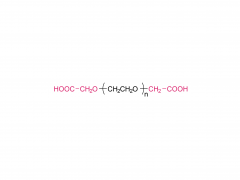
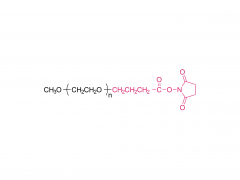
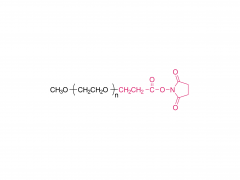
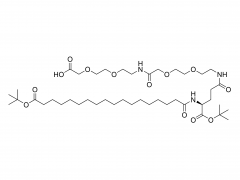
Polyethylene glycol (PEG), as an important synthetic polymer, is widely used in pharmaceuticals and biomedicine due to its excellent biocompatibility, low toxicity, and superior solubility. In recent years, the multi-arm form of polyethylene glycol (multi-arm PEG) has become an indispensable material in drug delivery and bioengineering due to its unique structural characteristics. Its diverse applications not only enhance the effectiveness of drug formulations but also provide new pathways for innovation in biopharmaceuticals.
-
Basic Characteristics of Multi-Arm Polyethylene Glycol
Multi-arm polyethylene glycol refers to molecules with two or more polyethylene glycol side chains attached to the main PEG backbone. Compared to single-arm PEG, this multi-arm structure exhibits greater flexibility and stronger connectivity, resulting in superior properties in biological applications. By adjusting the number of arms and the molecular weight of multi-arm PEG, precise control over drug release rates can be achieved, meeting the needs of various application scenarios. -
Applications of Multi-Arm Polyethylene Glycol in Drug Delivery
-
Targeted Drug Carriers
Multi-arm polyethylene glycol is commonly used as a targeted drug carrier in drug delivery systems. Due to its multi-arm structure, it can form stable complexes with drug molecules, thereby improving the bioavailability of drugs. This structure can be modified to bind to specific target cells, enhancing the selectivity of drugs and enabling more effective delivery to target sites while minimizing effects on healthy cells. -
Sustained-Release Formulations
In the development of sustained-release formulations, multi-arm polyethylene glycol offers significant advantages. Its unique molecular structure can form more stable micelles or microcapsules, effectively prolonging drug release times. For example, sustained-release formulations prepared using multi-arm polyethylene glycol can continuously release drugs over extended periods, meeting the medication needs of patients with chronic diseases. -
Biomaterials
The applications of multi-arm polyethylene glycol in tissue engineering and biomaterials are continually expanding. By combining multi-arm PEG with other biomaterials to form composite scaffolds, a more suitable environment for cell growth can be provided, promoting tissue repair. Particularly in muscle and bone regeneration, materials with this structure can significantly enhance tissue regeneration rates, offering patients a better rehabilitation experience. -
Role of Multi-Arm Polyethylene Glycol in Vaccine Development
With advances in vaccine research, the application of multi-arm polyethylene glycol has garnered increasing attention. Leveraging its unique structural characteristics, the immunogenicity of vaccines can be enhanced. By modifying antigen molecules with multi-arm PEG, the stability and efficacy of vaccines can be effectively improved, strengthening the immune system's response. Additionally, the application of multi-arm polyethylene glycol in nanocarrier vaccines provides more possibilities for the development of novel vaccines. -
Production Processes and Technological Advantages
The production process of multi-arm polyethylene glycol is complex, requiring high-precision polymerization and modification steps. Xiamen Sainuobangge Biotechnology Co., Ltd. has accumulated extensive experience and technology in this field. By integrating advanced CDMO models, they ensure that every production step meets international standards. This efficient production capability not only provides strong support for drug development but also helps clients reduce research and development costs, enhancing the market competitiveness of their products.
The widespread applications of multi-arm polyethylene glycol in drug delivery, sustained-release formulations, biomaterials, and vaccine development demonstrate its tremendous potential and flexibility. This high-molecular-weight material has not only brought substantial innovations to the pharmaceutical industry but also made significant contributions to improving patients' quality of life. By continuously exploring the applications of multi-arm polyethylene glycol, pharmaceutical companies can better meet market demands, advance biopharmaceutical technologies, and achieve higher therapeutic efficacy.